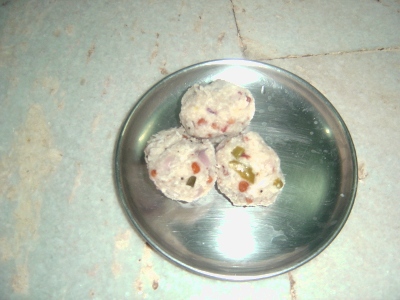
Pasalai Keerai poriyal

A quick post with just the recipe! Just to fill up the long gap :) This green is called “Pasalai Keerai” (Botanical name : Basella alba) . This particular vareity is called “Kodi Pasalai”.  A stir fry was too good when mixed with rice or a side dish! Must be great with roti’s or phulkas too.

The leaves are plump and juicy which calls for a juicy stir fry.

Pasalai Keerai Porial Ingredients :

Pasalai Keerai (Leaves cleaned and chopped to 1 inch pieces packed) – 2 Cups Onions (chopped ) – 3/4 Cup

For tempering :

Red chilles – 1 broken

Urad dal – 1/2 tea spoon

Mustard seeds – 1/2 tea spoon

Asafoetida – 1 pinch

Turmeric – 2 pinches

Peanut oil – 1 Table spoon

How to make ?

In a thick bottomed kadai heat the oil. when smoking hot add the ingredients under “Tempering”. When the seeds start spluttering add the chopped onions and fry in low flame till they turn translucent. Add the chopped keerai and keeping the flame low saute for 3-5 minutes till it wilts. Add 1/4 cup of water and cover and cook. After 5 minutes remove the cover, add salt to your taste, turn the flame to high and keep sauteing till the mix turns fairly dry. Switch off the stove and serve hot with piping hot rice. Enjoy!

Karunai Kizhangu Kola Urundai Kuzhambu – Yam dumplings in a spicy kurma

Many recipes in this space is a family tradition and one that was long left (in fact made very rarely) is the Karunai kizhangu kola urundai kuzahmbu (Yam dumplings in a spicy kurma). This is a special delicacy and made rarely because of the time it takes to make the ingredients and assemble them. But the taste is well worth the efforts and after so many years amma made this last week.  Every single bit of it is consumed with great pleasure and here I am sharing the joy with you all.

The Indian yam is called with several names in tamil Senai kizhangu, Chatti karunai kizhangu, Karunai kizhangu in different parts of Tamilnadu.
We call it as Karunai kizhangu.
Ingredients for Karunai Kizhangu kola urundai kulambu:

For the Kola Urundai:

To be soaked for half an hour :
Chana dal – 1/2 Cup

Skinned and chopped Yam/Karunai kizhangu – 1/2 Cup
Onion chopped – 1/2 Cup
Green chillies – 2 (chopped)

To be ground to a paste :
Ginger – 1 cm
Garlic – 2 cloves
Somb - 1 tea spoon
Poppy seeds – 1 tea spoon

Salt – 1/2 tea spoon or to taste
Turmeric powder – 2 pinches divided
For the spicy kurma:

Onion chopped – 1/2 Cup
Tomato chopped – 2 Table spoon
Coconut grated – 1/4 cup (packed)
Chilli powder – 1/4 tea spoon
Tamarind – 1 small lemon sized ball
Garam masala powder – 1/2 tea spoon
Ginger n Garlic paste – 1 tea spoon
Peanut oil – 1 Table spoon
Chopped coriander leaves – 1 Table spoon

How to make ?

The Kola Urundai:
Boil the chopped Karunai kizhangu pieces in 1/2 cup of water and a pinch of turmeric until fork tender. Drain and reserve the pieces. In a Sumeet style mixer take the soaked chana dal and grind to a coarse paste (just pulse 3-4 times). Grind the items listed under “To be ground to a paste” to a fine paste.

Take the boiled karunai kizhangu pieces in a wide vessel and mash it with the back of a large spoon. Mix the coarsely ground chana dal, the ground masala paste, chopped onions and turmeric powder and mix well to a homogeneous paste. Add salt and check and adjust to taste. Heat the oil for frying in a wide thick bottomed kadai and when smoking hot, make small lemon sized balls of the dough and fry till golden.


Lower the temperature of the stove while deep frying the dumplings to golden. Take them in a slotted spoon and drain them in tissue paper. These dumplings can be had on its own with any spicy sauce on the side.

The Spicy Kurma:
Soak the tamarind in 1/2 cup of water for 10 minutes and extract the pulp, filter and reserve it. Grind the coconut with a tea spoon of water of water to a smooth paste. If needed sprinkle little water to make the paste smooth and creamy. In a thick bottomed wide vessel add the oil and when it is smoking hot add the ginger garlic paste and fry till it turns golden. Now add the chopped onions and saute till the corner starts browning. Add the tomatoes and saute till it turns mushy. Now add the chilli powder, Garam masala powder, and required salt and saute for few seconds. Now add 1 Cup of water and mix well. Adjust salt by checking at this point of time. When the raw smell of chilli powder goes off add the tamarind extract and let it boil for 5 more minutes. Add the fried dumplings and let the mixture simmer for 5-7 minutes. Add the coconut paste and mix well and let the creamy gravy start boiling. Immediately switch off the stove and sprinkle the chopped coriander leaves and cover. Let the tastes mix and mingle well.

Serve hot with steamed rice and a papad on the side. Enjoy!

Vinayaga chathurthi celebration

            Sandal abhishekam for lord Vinayaga


    After the alankaaram…


    Chathurthy bounty – Pori kadalai, Sundal, Poornam kozhukattai, Mothakam, Ulundhu vadai, Vemicelli Payasam Guava and Pomegranete

Hope you all had a wonderful celebration at home…Prayers for all of your well being.

Hot n Sweet Mango relish

Its a long gap since my last visit to my blog. Amma not being so well does not give me agood mood to blog.

Now she is feeling better by God’s grace and hence I am back to blogging.
Even though the mango season is over I am getting few green mangoes now and then. This delicacy is one Amma learnt from her neighbour. The sourness of raw mango along with the sweetness of jaggery and the sharp hot taste that the chilli powder gives to this dish gives a burst if flavor when you taste it. It goes well with a creamy curd rice but can go with any dish like Idli, chappathi, dosa or any bland tasting rice variety too.


Hot n Sweet Mango relish
Ingredients:
Green mangoes cut into 2 inch pieces – 10-12 pieces
Powdered Jaggery – 2 Table spoon
Mustard seeds – 1/4 tea spoon
Asafoetida – 2 pinches
Curry leaves – 1 sprig
Urad dal – 1/2 tea spoon
Chilli powder – 1 Tea spoon (or more to taste)
Salt – 2 pinch
Peanut oil – 2 teaspoon
Turmeric powder – 1 pinch

How to make it ?
In a thick bottomed kadai heat the peanut oil. Once it starts smoking add the urad dal, mustard seeds, curry leaves and asafoetida. When the mustard seeds starts spluttering add the cut mango pieces and mix well. Add the chilli powder and mix to combine. Add 1/2 cup of water. Add the turmeric powder and mix well. Cover and cook till the mangoes are just soft. Add the jaggery powder and mix well and switch off the stove.


Take a lick and I bet you”ll love it :) Serve with any dish but best tastes with curd rice.

Milk n Coconut Burfi

As I rang the doorbell I noticed a new pair of shoes at the door step and could hear the younger ones voice chatting loudly! Sigh, who’s the catch today for her ?

My Father’s friend who was a roommate during his bachelor days visited us last week. The joy of meeting old friends that too keeping touch all these years were gleaming in both of their eyes and all the rest of us were watching them joyfully as they exchanged old stories.

I was surprised at the elder and younger ones talking to him. I have never taught any behavioural lessons to them (can I teach to them any?) but they so nicely welcomed him and the younger one went into the kitchen (she would never otherwise) and insisted my Amma to give her a plate of snacks to serve him. As a mother I really felt proud.

When we were kids there is a  routine conversation happening between our parents and we three (me, my sis and my bro) whenever somebody visit us. We will go to our parents every night when there are guests (all three) and ask this question “When will they leave the house ?”. When the first time it happened both Amma and Appa were shocked and started giving advice on how should one talk and behave before guests and my Amma already getting ready to slap us. But we quickly uttered the next statement “No Appa, they should stay with us for at least a month-long”. You should see their faces puzzled and slowly smiling at the innocence of the 3 little kids.

Coming to reality, the night I was boiling milk for my Father’s Friend S Uncle, came in the elder one. My father having a small talk with me on what should we cook the next day morning. The elder one reluctantly asked my dad, “Thatha, andha puthu thatha eppo kilambuvaanga?”  (Grandpa, when will that new Grandpa leave the home?”). Appa and me both were taken aback but not the least I expected any answers like we did out of innocence in our childhood days.

When Appa started talking “No dear, you are not supposed to talk that way…”, he quickly same the same statement which came out of our mouths some 30 years ago “Illai thatha, andha pudhu thatha namma koodave irukatume” (No Grandpa, let him be with us forever). Both Appa and me couldn’t stop laughing and that made him a puzzled kid :) The genes have perfectly replicated !

Jumping inot today’s recipe I had a half a pack of Amul Fresh cream after making some chocolate fudge. I had to use it within two days and hence made these burfis. They were more creamy tasting than the ordinary ones and we all enjoyed it thoroughly. With some pepper “Kara sev” in the side the burfis pair up wonderfully.

Milk  Coconut Burfi

Ingredients:

Fresh coconut scraped – 2.5 Cups (well packed)

Sugar – 2.5 Cups

Cardomom powdered – 1/2 spoon

Salt 1 pinch

Amul fresh cream or any fresh cream available – 1/2 Cup

How to make it ?


In a thick bottomed kadai Take the measured sugar and add water just enough to immerse it and boil it with the pinch of salt. When the syrup becomes slightly sticky add the grated coconut and fresh cream and mix well. Cook in low flame till the mix starts leaving the side. It will still be lightly sticky add the teaspoon on ghee and cardomom powder and mix well. Grease a plate with few drops of ghee and trasnfer the content into it. Level the mix evenly on the plate and let it cool for half an hour.


 Slice it with a sharp knife each time wiping it in a clean cloth and serve with a spicy snack on the side. Enjoy!

An appraisal and some Paneer Pakoras

This happened when I was working. Kids are now too cautious and smart and its tough to advice them.
One night after the bedtime stories are over I asked my little girl if she had finished her homework. She suddenly turned to a cautious kid and mumbled a “yes-no”. I promptly said if she is not going to do her homework regularly and get good grades I am sure will become wild. She immediately said “Ok Amma, even you should perform well in your office and get first rank, else I will become wild”. Good God, she doesn’t know the appraisal ratings like “Outstanding”, “Exceeded expctations” etc, otherwise would have made more clear statements. I immediately went into sleep mode and switched off the light and instructed them to close their eyes and go to sleep. I can’t sleep for the next one hour !

Let me come to an interesting recipe. The paneer pakoras where an accident when I had some left over milk solid (yet to turn into a pneer bar) and am not for any more paneer butter masala. Mixing in with my usual pakora dough gave an “U” turn to the real taste and was a great hit.

Paneer pakora

Ingredients:
Crumbled paneer – 1 Cup
(or)
Add 2 Table spoon of lemon juice in 3 cups of boiled milk and filer the

separated milk solids till all water in separated.
Bengal gram flour – 1/3 cup
Corn flour – 1 Table spoon
Gaam masala powder – 1 pinch
Chilli powder – 1/2 teaspoon
Chopped onions – 1/2 cup
Salt – to taste

Peanut oil for deep frying the pakoras (about 1 cup)

How to make it?

Mix the crumbled paneer or the milk solids and all the rest of ingredients till mixed well. The water content in the milk solid should be enough for the moisture required but if you are using crumbled paneer sprinkle little water until the dough comes together. Use a light hand to mix everything. Taste the dough and adjust salt to your taste. Heat the peanut oil in a kadai until smoking point and simmer. Drop one inch balls of the dough and deep fry till golden brown. Serve hot with a cup of hot tea and enjoy!

Pudalangai Poricha Kootu – Spicy Snake guard kootu

Unexpected guests, amma’s illness all kept be away from blogging these days. Hope I would continue my weekly blogging from now onwards strictly. (How many promises! Sigh!)
During a a recent visit to the market I saw these funny snake guards. Even the veggie vendor got fascinated about the snake guards shapes and had hung a couple of them in  a ceiling. I got three of them.

I am not sure what to cook. A kootu? Or a poriyal ? But I hate the chana dal kootu all the ways. So when flipping through the pages of a book by my favorite author La. Sa. Ra., I hit upon the combo pudalangai poricha kootu and kothumalli thuvayal. Having been impressed by his wonderful food combo tastes I immediately decided to make use of the snake guards into this wonderful and flavorful kootu. It’s just a hit I should say. For the first time in my blogging experience I clicked the last bowl of the kootu for the photos. Even though I planned to blog about this kootu the excellent aroma made me eat first and after the entire family finished off eating I remembered about the clicks. But that doesn’t matter. I am blogging here. 
   The only condition to get the right taste is the snake guards should be very young and tender. Also use fresh grated coconut to get the flavors right. Now jumping to the recipe…

Pudalangai Poricha kootu - Snake guard kootu
ingredients :

Baby snake guards chopped – 3 Cups (packed)
Refer here on how to clean and prepare snake guard before cooking
Turmeric – 2 pinches
Yellow Moong dal – 1/3 Cup
Asafoetida – 1 pinch
Peanut oil – 3 teaspoons (divided)
Chopped coriander – 2 Table spoon

For the paste :

Dry Red Chilles – 3
Coriander seeds – 1 Table spoon
Chana dal – 1 Table spoon
Pepper corns – 3
Grated coconut – 1/2 Cup (loosely packed)

 
How to make it?
Cook the moong dal with a pinch of asafoetida and a pinch of turmeric and a spoon of peanut oil till soft.

Refer here to know how to cook prepare snake guard for cooking.
In a thick bottomed pan cook the chopped snake guard pieces with a pinch of turmeric and 1/4 cup of water till soft. Add the cooked moong dal and mix well and cook for 5 minutes in simmer. In a thick bottomed kadai heat 1 teaspoon of peanut oil the items under “For the paste” in the same order. Saute in low flame till the grated coconut turns pale. Let it cool and grind it to a smooth paste with very little water. Add this to the snake guard and moong dal mix and mix well. Add salt and mix well. Check and adjust till it tastes right for you. Simmer for further 5 minutes. Sprinkle the chopped coriander leaves and cover and switch off the stove. Let the flavors blend well.
Serve hot with a coriander chutney and piping hot rice. Its a hearty and light meal :)

Lemon dal rasam in a cloudy day

My last update carried the new about the showers but looks like the rain Gods are still pondering either to shower are not and hence we are having cloudy days till now. Thats making ways to spicy hot soups and rasams. Recenly made this lemony dal rasam which was lovely to have on its own or with rice and a pepper papad. I am jumping straight into the recipe without much talking…

Lemon dal rasam

Ingredients:

Toor dal – 1/4 Cup
Lemon juice – 4 Table spoons (if u want it more tart add more to match your taste)
Rasam powder – 2 teaspoons
Garlic – 1 pod
Turmeric – 2 pinches (divided)
Tomatoes chopped – 1/3 Cup
Curry leaves – 10
Coriander leaves chopped – 2 Table spoons
Pepper powder (optional) – 2 to 3 pinches
Asafoetida – 2 pinches divided
Mustard seeds – 1/4 teaspoon
Groundnut oil/ghee – 1 teaspoon

How to make it?

In a pressure cooker cook the toor dal with 2 cups of water, a pinch of turmeric powder, a pinch of asafoetida and a pod of garlic to 3 whistles. Once the cooker releases its pressure filter the dal water in a separate bowl. Mash the cooked dal well with a large spoon and add it to the water. Now add the remaining turmeric powder, tomatoes, curry leaves and salt to taste. In a thick bottomed kadai heat the oil and once smoking hot add the asafoetida and mustard seeds. Once the seeds splutter add the dal water mix to the kadai carefully. Mix well and check for the salt and adjust to your taste. Once the rasam is foamy add the rasam powder and let it  boil just for 3-5 seconds. Switch off the stove and immediately add the lemon juice and chopped coriander leaves, mix well and cover the vessel. After a few minutes test for the tartness. If you want it more sour add lemon juice in teaspoons and check it after every addition. Also remember if you are going to have it after an hour or more keep it in mind the rasam becomes more sour as time passes and accordingly add the lemon juice. Serve it hot sprinkled with pepper powder with roasted bread slices for a light dinner or with piping hot rice and papad. Enjoy!

Note : If you are not using rasam powder roast one teaspoon of jeera and 1/2 teaspoon of pepper in a kadai and make it to a coarse powder.

The Monsoon and Curd cheese jamuns

At last the very hot summer has ended in my parts of the world and right away the rain Gods started showering their blessings upon us. Yes today we had the slight showers of monsoon. With a big sigh we feel relieved and happy.

The mango season is in full swing (which was the only reason for me to welcome summer) and I am enjoying lots of ripe juicy mangoes. I have a dozen recipes bookmarked to try with mangoes but each time I pick one up I cannot resist to eat it as it is and no idea of cooking it comes to my mind ! he he! As the saying goes “A rose is a rose is a rose” I would say “a mango is a mango is a mango”. No puddings, cakes pancakes and milkshakes can alter its pure sweetness and plumpness. So who are all enjoying mangoes at this time? Share your experiences with me :)

I am a big fan of the book “Samaithu Paar” and the legend Meenakshi Ammal will be remembered by thousands of south indians for a long time. When I happened to check on the Marriage feast grocery list for 1000 people I can’t stop appreciating her. I used to try her recipes often and the below is an adapted version from her “Thayir Badushah” (Curd cheese badushah).

Recently bought a milk powder box for a short outing but almost half of it turned back home unused. Having a short expiry date I am using it everywhere I could. This is one of the recipes of that sought.

Curd cheese jamuns (Adapted from “Thayir badushah” from Samaithu paar)

Ingredients:
Thick fresh curds – 1 Cup
All purpose flour or Maida – 1/2 Cup
Milk powder – 4-5 Table spoons (divided)
(Optional) Cooking soda – 1 pinch
Sugar – 1.5 Cups
Cardamom – 2
Salt – 1 pinch
Vanaspati or Ghee for frying the jamuns – 1 Cup


How to make ?

Make fresh curds the night before. Hang the curds to separate the whey in a thin white cloth for an hour. Once all water is drained take the soft cheese in a mixing bowl.and add the maida and cooking soda (if using, I omitted this). If you are using full cream milk and the above mix looks pliable and not that sticky proceed to the frying step. I ended up with a very sticky mass  which I can’t imagine to proceed for shaping. I added milk powder spoon full until the mass came to consistency where with oiled hands I could make small balls.

In the meanwhile take the sugar, a pinch of salt and crush the cardamoms and add it all to a heavy bottomed vessel. Add water until the sugar is just immersed and heat it till the syrup becomes sticky. Switch off the stove and keep the syrup aside. It cooks after that too and gets to the desired consistency. If the syrup gets cooked till 1 string consistency after taking it off the stove it gets crystallised. In turn adding few drops of lemon juice too helps stopping the crystallisation.

Heat the vanaspati or ghee till smoking and immediately simmer. Oil your hands and make small half inch balls and deep fry till golden. You can see few turned darker. Thats because of my over-frying. So be careful. As soon as the bubbles in the frying pan reduces take out the fried balls with a slotted spoon and immerse in sugar syrup. Repeat till all the dough is done. Let the balls soak in the syrup for an hour. Enjoy as it is or chilled. If you want it tio store for more than a day store in the refrigerator.


The curd cheese gives a hint of tanginess and the soft balls were a delight to bite into it. I tried shaping it to a badushah shape but it did not cook well but turned darker. Hence I sticked to the jamuns. Not like the coommon gulab jamuns the tanginess gives a totoayy new dimension to this sweet. Try it and let me know “)

A decision and a pumpkin rasavaangi

What really makes life simple and peaceful? This was the question in my mind a year back andthe answer to that might have aided for this shift and change in the lifestyle. As many of my dear blogging friends have asked my answer would be this.

 The Indian city lifestyle has become like this. Yearn more in a good decent job. As soon as your initial appetite for spending calms down, start investing. Either buy a house or a vehicle or both with a bank loan. Start paying EMIs and when you watch closely your spending style would have gone back to the before-job days or a less-paying-job days. You slog and slog until the loans are done. You would have definitely grown old and your hair turns grey by this time. When you look back the never ending rat race would have not brought much peace and happiness in your life after all the slogging. When this thought strike my mind boldly the decision is taken and we shifted for a low cost but more peace life style. Hope I am sounding true and simple !  Anyways I am happier now :)

Coming to todays recipe its a simple rasavangi ( a type of roasted dals and coconut base along with tamarind) for the sweet pumpkins. Pumpkins are in season and from Pollachi my Anna visited us. You know what he brought ? A bag of tender vegetables ! What else can make me more happier ? The pumpkins where in a deep orange and just the size of a big coconut. Truly sweet when tasted raw when got into this rasavangi dressing it became a delightful meal.

Pumpkin Rasavangi

Ingredients:

Pumpkin (peeled, deseeded, cut into bite sized pieces) – 1 Cup
Coconut grated – 1/4 Cup
Red chilles – 2 nos
Tamarind – a big gooseberry size
Dhania – 1 Table spoon
Chana dal – 1 Tablespoon
Salt to taste
Oil – 2 Tablespoon (divided)

For seasoning:
Urad dal – 1/2 teaspoon
Mustard seeds – 1/4 teaspoon
Asafoetida – 2 pinches
Curry leaves – 1 sprig

How to make ?

Soak the tamarind in 1/2 cup of water for 10 mins and squeeze well and remove the pulp. The extract should be 1/2 cup after filtering. In the thick bottomed wide vessel add 1 Table spoon of oil and when hot add the ingredients for seasoning. When the seeds start spluttering add the pumpkin pieces and mix for a minute. Add water till the veggies get submerged and conver and cook in a medium flame for 5 mins. Add the tamarind extract and continue cooking covered till the veggies are soft.
In the mean time in a separate thick bottomed kadai heat the remaining table spoon of oil and roast the Chana dal, Dhania seeds, red chilles and grated coconut (add the in the same order after sauteing for half a minute between every addition) . Let it cool and grind it to a smooth paste with very little water.
When the veggies are soft enough add salt and mix well and add the ground paste to it. Add very little water to make it to a gravy consistency and adjust salt at this point of time. Let this come to a boil and immediately switch off the stove. Cover and let the flavors mingle. If you want you can add a 1/2 teaspoon of jaggery at this point and mix well but thats optional. Also if you want it more hot add more red chiiles.
Serve hot with steamed rice and a spoon of ghee with roasted papat. This makes a delicious meal.

The pumpkins can be substitued with butternut squash too!